
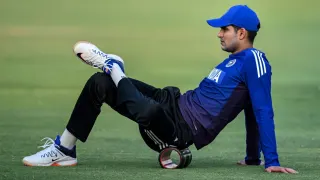
India have sprung a surprise ahead of the 2026 T20 World Cup by leaving out vice-captain Shubman Gill, opting instead for a reshaped combination that brings Ishan Kishan and Rinku Singh back into the fold. The decision signals a clear shift in strategy, with team management prioritising flexibility and balance over continuity at the top.
Kishan’s recall comes on the back of outstanding domestic form, having dominated the Syed Mushtaq Ali Trophy with 517 runs at a blistering strike rate close to 200. His inclusion as a wicketkeeper-opener allowed India to accommodate Rinku, whose finishing prowess had been missing from recent T20I squads. The knock-on effect of this rethink saw Jitesh Sharma, the first-choice wicketkeeper in recent series, miss out despite doing little wrong.
With Gill absent, Axar Patel has been named vice-captain in the 15-man squad, while the remainder of the selection followed largely predictable lines. Jasprit Bumrah, Arshdeep Singh and Harshit Rana headline the pace attack, with at least two expected to feature regularly in the playing XI. Spin duties will be led by Varun Chakravarthy and Kuldeep Yadav, supported by spin allrounders Axar and Washington Sundar.
India’s middle order remains power-packed, featuring captain Suryakumar Yadav alongside Tilak Varma and the returning Rinku. Hardik Pandya and Shivam Dube provide seam-bowling allround options, while Abhishek Sharma, Sanju Samson and Kishan complete the squad. This same group will also contest the upcoming five-match T20I series against New Zealand.
Explaining the late call to drop Gill, selection committee chair Ajit Agarkar stressed that the move was driven purely by team balance rather than individual merit. He pointed to the management’s preference for a wicketkeeper at the top of the order, allowing greater flexibility with combinations further down the lineup. With only 15 spots available, Agarkar acknowledged that tough calls were unavoidable.
Gill’s omission comes despite his elevated status in the side. Since taking on vice-captaincy duties, he has struggled to make a major impact in T20Is, failing to register a half-century in 15 innings and scoring 291 runs at a strike rate of 137.26. He also missed the final T20I against South Africa due to a foot injury, during which Sanju Samson impressed with a quick 37 off 22.
Captain Suryakumar Yadav was quick to downplay any suggestion that Gill’s form influenced the decision. Instead, he reiterated that the choice was about creating multiple winning combinations, particularly by ensuring a wicketkeeper opens the batting. Suryakumar emphasised Gill’s quality and importance, noting that the circumstances—not ability—had dictated the call.
As India fine-tune their plans for the World Cup, the selection underscores a clear message: adaptability and role clarity have taken precedence. Whether the bold reshuffle pays off will become clearer in the New Zealand series and, ultimately, on the world stage.
