
England were weighing up whether to lodge a formal complaint with the match referee on Wednesday night after the supplier of the Snicko technology used in Australia accepted “full responsibility” for an apparent error during the third Ashes Test.
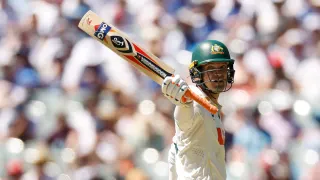
The controversy centred on Alex Carey’s reprieve on 72, when he flashed at the opening delivery of Josh Tongue’s 63rd over. England’s fielders, led by wicketkeeper Jamie Smith, immediately appealed for a catch behind. On-field umpire Ahsan Raza ruled Carey not out, a decision England swiftly reviewed.
Real-Time Snickometer footage showed a noticeable spike, but it appeared several frames before the ball passed Carey’s bat. Chris Gaffaney, acting as TV umpire, concluded the spike was “before the bat”, adding that the ball had “gone well under” the edge, with “a clear gap” visible.
Carey went on to add 34 more runs and later admitted he believed he had made contact. “I thought there was a feather or some sort of noise when it passed the bat,” he said. “It looked a bit strange on the replay with the sound coming early. If I’d been given out, I think I would have reviewed it — probably not confidently, though.”
He added that he was “clearly not” a walker and accepted the moment as part of the game. “Snicko obviously didn’t line up, did it? Sometimes you get a bit of luck, and today it probably went my way.”
Warren Brennan, founder of BBG Sports, which supplies the technology used in Tests in Australia, told The Age that the issue stemmed from operator error. “Given that Alex Carey admitted he hit the ball, the only conclusion is that the Snicko operator selected the incorrect stump microphone for audio processing,” Brennan said. “In light of this, BBG Sports takes full responsibility for the error.”
The ICC currently approves two sound-based edge-detection systems: Real-Time Snickometer, used in Australia, and UltraEdge, which is deployed elsewhere.
Former ICC umpire performance manager Simon Taufel suggested the technology may not have been correctly calibrated. “The confusing part was that the spike occurred a couple of frames before the bat, which is extraordinary,” Taufel said on Channel 7. “I’ve never seen a spike like that without the bat hitting something — pad, ground, or ball onto pad. My gut tells me Carey hit it and the calibration wasn’t right.”
The incident revived earlier concerns about Snicko during the series, including a controversial caught-behind decision involving Steven Smith in Perth. England’s bowling coach David Saker said doubts had persisted within the dressing room.
“The boys were pretty confident he hit it,” Saker said. “I think the calibration’s been out for a while this series. Some things just don’t add up. At that stage of the game, it was a big decision. Those moments hurt.”
Saker added that England may now escalate the matter to match referee Jeff Crowe. “We haven’t done anything formally yet, but after today, that could change. We shouldn’t still be talking about this after a day’s play — the technology should be better.”
Under ICC playing conditions, the match referee has final oversight of the technology used, in consultation with ICC technical officials, management, and the host boards.
BBG Sports also supplies Hot Spot, which was previously part of the DRS but was dropped by host broadcaster Fox Sports last year following ongoing criticism and concerns over reliability in extreme heat.
Australia closed day one on 326 for 8 after opting to bat, with neither side able to assert dominance. “It would have been nice to lose a few wickets less,” Carey said. “We had chances to go big and missed some moments, but we’re still well in the game.”
Saker described the day as “pretty even”, adding: “It’d be nice to knock them over quickly in the morning and then put a big score on the board. That first innings is crucial because I don’t think the pitch will get easier late on days four and five.”
