
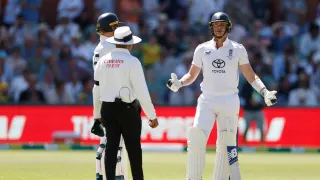
Mitchell Starc called for Snicko to be “sacked” after edge-detection technology came under scrutiny for a second straight day during the third Ashes Test at Adelaide Oval, as Cricket Australia’s chief executive demanded clarity following a previous malfunction.
The controversy began when England had a review reinstated by match referee Jeff Crowe on the second morning after BBG Sports, the supplier of Snicko, admitted operator error had led to an incorrect reprieve for Alex Carey during his opening-day century. The ECB now intends to push the ICC to review its systems and protocols in light of the mishap.
Australian players were then incensed when Jamie Smith was given not out after a potential catch at first slip by Usman Khawaja off Pat Cummins. TV umpire Chris Gaffaney, consulting Snicko, ruled the ball had struck Smith’s helmet, but Australia argued it had hit his glove.
“Snicko needs to be sacked. That’s the worst technology there is,” Starc said, speaking near the stump mic after the decision was upheld. “They made a mistake the other day, and they make another mistake today.”
Smith later found himself dismissed caught behind off Cummins just two overs later, with Snicko registering a spike one frame after the ball had passed the bat — still within the accepted margin of error. The on-field umpires had deferred the call to Gaffaney.
Simon Taufel, former elite umpire and ICC official, argued that removing the “soft signal” two years ago was a mistake. “I love seeing umpires make decisions,” Taufel told Channel 7. “Technology should support umpires, not replace them. When there’s doubt, the batter should stay. The game deserves better, and I’d like the soft signal reinstated.”
Snicko, formally Real-Time Snickometer, is one of two ICC-licensed edge-detection systems, alongside the more widely used UltraEdge, operated by HawkEye. Host broadcasters select and fund the technology, and Snicko is understood to be the cheaper option.
Todd Greenberg, Cricket Australia’s CEO, told SEN Radio that the governing body was “asking the right questions of the right people” following the opening-day error. “We’re not happy with it. It’s not good enough, and we need assurance this won’t happen again,” he said.
Any adjustments to protocols or technology would require ICC cricket committee approval and sign-off by the chief executives’ committee. The ICC declined to comment when contacted by ESPNcricinfo.
England’s batting coach Marcus Trescothick called on authorities to resolve the issue. “It’s not ideal. We’ve been on the wrong end of a poor decision yesterday and a few questionable ones today. It’s up to the powers behind the scenes to sort it out,” he said.
Former Australia captain Ricky Ponting also criticised Snicko. “This technology isn’t as reliable as what other countries use,” he told Channel 7. “Umpires can’t fully trust it. The third umpire has to make calls based on what the tech shows, and sometimes their gut tells them it’s wrong. That can’t happen. You need to trust your technology.”
Nathan Lyon declined to comment on Snicko at the close-of-play press conference, simply saying: “I’m not going to comment on the DRS.”
